
Overview of Consulting Types and Specialisations
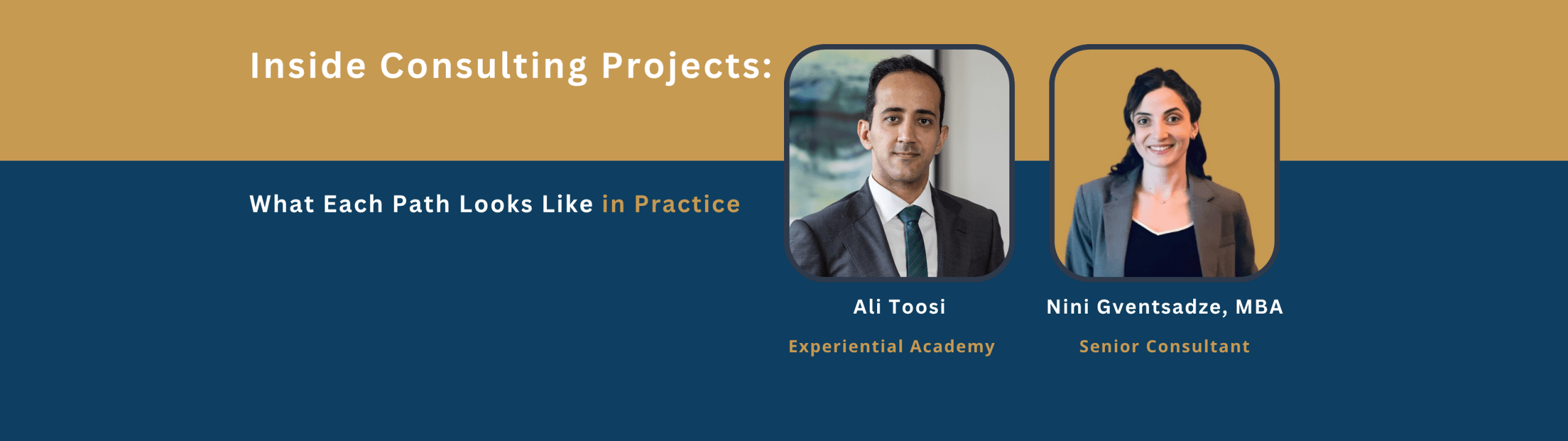
Nini and Ali provided a comprehensive breakdown of the main consulting types: strategy, management, operations, technology, and others, explaining their differences, required skills, and typical clients, with examples from their own careers.
Strategy Consulting
Nini described strategy consulting as working directly with executive-level clients to solve high-level, big-picture problems such as market positioning, business model development, and group strategies like acquisitions and expansion. Clients can include large corporations, startups, and government entities, and industry expertise is often required.
Management Consulting
Nini clarified that management consulting focuses on how a company should be managed to achieve its goals, involving organisational structures, processes, and change management, often working with senior executives and requiring strong interpersonal skills.
Operations Consulting Focus:
Operations consulting was explained as optimising specific processes within organisations, such as supply chains or inventory management, typically working with department heads or middle managers, and requiring cross-functional collaboration skills.
Other Consulting Specialisations:
Nini briefly mentioned other consulting areas like marketing, HR, IT, and financial consulting, each requiring specialised expertise, and highlighted the growing fields of leadership and recruitment consulting.
Technology and Enterprise Solution Consulting:
Ali detailed technology consulting, particularly enterprise solutions like ERP and fleet management, describing the integration of business functions through software and the various roles within tech consulting, such as pre-sales, functional, technical, and solution architect roles.
Consulting Project Lifecycle and Practical Realities
Ali and Nini discussed the typical stages of consulting projects: initiation, planning, implementation, and delivery, emphasising the importance of needs analysis, stakeholder engagement, project management, and the less glamorous aspects of consulting work.
Project Initiation and Needs Analysis:
Ali described the initiation phase as involving client meetings for needs analysis, which blends sales, research, and stakeholder engagement, and stressed the importance of consultants leading this phase to ensure project success and client trust.
Challenges in Stakeholder Engagement:
Ali shared examples where insufficient involvement of key stakeholders led to project setbacks, such as reverting to legacy systems or facing resistance during implementation, highlighting the necessity of comprehensive stakeholder onboarding.
Project Planning and Adaptability:
Nini explained that while detailed planning is essential, consulting projects rarely go exactly as planned due to unforeseen issues, requiring consultants to be adaptable and ready for ongoing changes and new project scopes.
Implementation and Data Challenges:
Both Ali and Nini discussed the implementation phase, which includes tasks like software installation, data migration, and training, and noted that data quality issues often require significant effort in cleaning and transforming data before analysis.
Project Management as a Core Skill:
Nini emphasised that project management is integral to consulting, as consultants must simultaneously manage projects, stakeholders, and deliverables, often in a fast-paced and unpredictable environment.
Skills, Career Paths, and Industry Entry
Ali and Nini outlined the key skills needed for consulting, described typical career progression from analyst to partner, and discussed the importance of both generalist and specialist experience for entering and advancing in the consulting industry.
Consulting Career Progression: Ali described the typical consulting career ladder, starting from analyst and progressing through consultant, associate, senior, manager, director, and partner, with increasing project ownership and responsibility at each level.
Essential Consulting Skills: Both speakers highlighted that consulting requires a mix of analytical, sales, communication, project management, and change management skills, not just technical or industry knowledge.
Generalist vs. Specialist Pathways: Ali explained the ‘T-shaped’ career model, where consultants start as generalists and later specialise, but noted that having a speciality can facilitate market entry due to current job market demands.
Learning and Developing Consulting Skills: Nini emphasised that all consulting skills are learnable and that early career roles often involve less glamorous, hands-on work, which is essential for skill development and career advancement.
Fact Checks and Common Misconceptions About Consulting
Ali and Nini addressed common misconceptions about consulting, such as the belief that consultants only provide high-level advice or must be extroverted, and clarified the realities of the profession, including the importance of reputation and the diversity of consulting environments.
Consultant Stereotypes vs. Reality: Ali debunked stereotypes of consultants as purely idea-generating or extroverted individuals, explaining that much of the work involves practical tasks, research, and sometimes less visible contributions.
Reputation and Business Development: Ali stressed that successful consulting businesses grow through reputation and referrals, making client satisfaction and project outcomes critical for long-term success.
Final Thoughts
Ali and Nini described their exclusive, small-group workshops focused on real-world startup consulting projects, covering stages such as project initiation, planning, and execution. They emphasised the practical, hands-on nature of these sessions for aspiring consultants.